Understanding the Importance of Photography Workshops for Creative Growth
How Can We Recognise a High-Quality Photography Workshop?
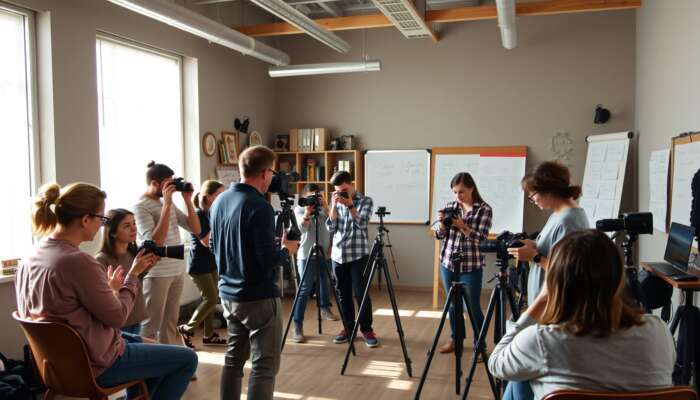
A high-quality photography workshop seamlessly combines hands-on experience, expert guidance, and structured creative exercises. Typically spanning multiple days, these workshops progress from fundamental to advanced techniques. This organised approach cultivates a nurturing environment that greatly enhances the learning experiences of all attendees. The integration of theoretical knowledge with practical applications leads to notable advancements in skills and confidence.
In vibrant photography workshops, the level of participant interaction is crucial. A workshop should not only teach technical skills but also spark creativity and encourage collaboration amongst attendees. This holistic approach ensures that participants leave with improved skills, fresh perspectives, and renewed enthusiasm for exploring the art of photography.
- Hands-on practice opportunities.
- Expert mentorship from seasoned photographers.
- Structured sessions that evolve from basic to advanced.
- Creative exercises that nurture teamwork.
What Essential Elements Should Be Evaluated When Planning a Workshop?
When planning a photography workshop, it is paramount to prioritise curriculum depth, participant engagement, and resource availability. Crafting engaging and productive experiences is essential for memorable workshops. The more interactive and resource-rich the setting, the more effectively participants can hone their skills and appreciate the learning journey.
Logistical considerations, such as the choice of venue, duration, and accessibility of the workshop, are equally significant. A well-structured curriculum promotes practical exercises and group discussions, creating an environment where creativity and learning can thrive.
- Curriculum depth ensures comprehensive knowledge acquisition.
- Participant engagement enhances the overall experience.
- Resource availability strengthens skill development.
- Logistics greatly influence experience and accessibility.
How Have Photography Workshops Evolved Over Time?
Photography workshops consistently evolve, integrating new technologies and participant feedback. They adapt formats to incorporate digital tools and collaborative projects, ensuring that content remains pertinent for a diverse array of learners. This ongoing evolution is vital for keeping pace with the rapidly shifting landscape of photography.
By 2026, workshops increasingly embrace online platforms for remote learning. The use of social media challenges and feedback loops significantly enhances participant engagement and enriches teaching methodologies. Furthermore, mobile photography and virtual reality tools are becoming prominent focuses in workshops, providing innovative methods to elevate the learning experience.
- Incorporation of online platforms for remote education.
- Integration of social media challenges to increase engagement.
- Utilisation of feedback mechanisms for teaching adaptation.
- Introduction of mobile photography as a focal area.
- Adoption of virtual reality tools for immersive learning experiences.
What Types of Photography Workshops Are Available?

Photography workshops encompass a broad spectrum of formats, ranging from beginner sessions that cover essential camera techniques to advanced classes focusing on niche topics such as portraiture or landscape photography. Workshops may involve hands-on field trips, online modules, or intensive retreats, allowing participants to choose options that suit their experience levels and objectives. For those keen to enhance their skills, a plethora of education-learning opportunities are accessible. Additionally, if you are interested in learning Spanish, explore the Top Spanish Language Schools in San Miguel de Allende.
For example, a beginner workshop may focus on mastering camera settings and the fundamentals of composition. In contrast, an advanced workshop could delve into specific areas such as astrophotography or macro photography. This range of options ensures that photographers at any stage can find experiences that resonate with their aspirations and aid in their growth.
| Workshop Level | Focus Area | Typical Duration |
|---|---|---|
| Beginner | Camera settings, composition basics | 1-2 days |
| Intermediate | Lighting techniques, portrait photography | 2-3 days |
| Advanced | Astrophotography, macro photography | 3-5 days |
What Benefits Can You Gain from Participating in Photography Workshops?
Participating in photography workshops not only enhances technical proficiency but also sparks creativity through collaborative activities. They provide valuable networking opportunities with both experts and peers, often resulting in increased confidence and inspiration for new projects. Ultimately, workshops act as catalysts for advancing careers and enriching personal enjoyment in photography. Exploring local attractions can further enhance your photography workshop experience and ignite your creative spark. Attractions
Workshops act as accelerators for growth, creating communities of like-minded individuals who share a passion for photography. This collaborative environment encourages the exchange of ideas, constructive criticism, and friendships that may lead to future creative projects.
- Improved technical skills and enhanced creativity.
- Networking opportunities with industry experts and peers.
- Boosted confidence and inspiration for new projects.
- Formation of a supportive photography community.
Insights from Experts on Photography Workshops in San Miguel de Allende
What Practical Steps Can Beginners Take to Start Their Photography Journey?

For those embarking on their photography journey, starting with essential equipment and grasping composition rules is crucial. Investing in a reliable camera, such as a DSLR or mirrorless model, is a fundamental first step. Familiarising yourself with your camera settings and experimenting with different lenses will significantly enhance your understanding of how these elements impact your images.
As beginners gain confidence, focusing on composition techniques, such as the rule of thirds and leading lines, can dramatically elevate image quality. Practicing during the golden hour, when natural light is at its finest, and capturing local landscapes in <a href="https://limitsofstrategy.com/top-dining-picks-restaurants-in-san-miguel-de-allende/">San Miguel de Allende</a> can help build both confidence and practical skills.
- Invest in a dependable camera.
- Learn the intricacies of your camera settings.
- Practice various composition techniques.
- Capture images during the golden hour for optimal lighting.
What Advanced Techniques Can Enthusiasts Explore to Enhance Their Craft?
For passionate photography enthusiasts eager to refine their skills, mastering lighting techniques and gaining proficiency with advanced editing software is essential. Lighting, whether natural or artificial, plays a significant role in shaping the mood and quality of photographs. Learning to manipulate light effectively can transform an ordinary photo into an extraordinary visual narrative.
Moreover, becoming adept in editing software like Adobe Lightroom or Photoshop is crucial for enhancing images after capture. These powerful tools allow for adjustments in exposure, contrast, and colours, empowering photographers to express their creativity in the final images.
- Master both natural and artificial lighting techniques.
- Become proficient with Adobe Lightroom or Photoshop.
- Experiment with exposure, contrast, and colour adjustments.
- Craft compelling narratives through effective editing practices.
What Benefits Arise from Structured Learning Paths in Workshops?
Structured learning paths greatly enhance skill retention during photography workshops. Following a coherent sequence allows participants to build their knowledge systematically, leading to a deeper understanding of various photography techniques. This method proves particularly effective for diverse learners, ensuring that everyone can grasp the material.
Success stories frequently highlight how individuals who follow structured learning paths report substantial growth in their skills. They often express increased confidence in showcasing their portfolios and a stronger connection to their personal photographic styles.
- Structured learning enhances long-term skill retention.
- A logical progression fosters a deeper understanding of concepts.
- Success stories illustrate tangible growth in participants.
- Confidence in presenting portfolios improves significantly.
How to Choose the Most Suitable Photography Workshop for Your Needs?
What Considerations Should Guide Your Decision-Making Process?
Several factors play a critical role in the decision-making process when selecting a photography workshop. The duration of the sessions is particularly significant, as it influences the depth of learning and the extent of interaction. Workshops that span several days often provide more comprehensive instruction than shorter one-day seminars.
Another key consideration is the expertise of the instructor. Researching potential instructors ensures they possess the necessary qualifications and experience in photography. Furthermore, group size is crucial for personalised attention, as smaller groups typically allow for more tailored guidance and interaction.
- Session length impacts the overall depth of learning.
- Instructor expertise is vital for delivering quality education.
- Group size affects the level of personalised attention.
- Aligning all factors with your personal goals enhances the learning experience.
How Can You Evaluate the Quality of an Instructor?
Evaluating instructor quality involves reviewing their portfolios, testimonials, and teaching methodologies. An instructor’s portfolio should reflect a diverse range of work that showcases their expertise and artistic vision. Seeking feedback from past participants can provide valuable insights into the instructor's effectiveness and approachability.
Attending sample classes or workshops allows potential participants to observe the instructor’s teaching style. An exceptional instructor will provide clear, inspiring guidance and cultivate an environment that encourages feedback and interaction among participants.
- Review instructor portfolios to assess diversity and expertise.
- Seek testimonials from previous participants for insights.
- Attend sample classes to evaluate teaching styles.
- Look for engaging and interactive teaching methods to enhance learning.
What Features Make a Workshop Engaging and Interactive?
An engaging workshop is distinguished by interactive elements, diverse topics, and hands-on activities that keep participants actively involved. These workshops often depart from traditional lecture formats, promoting discussions, critiques, and collaborative projects. Such engagement can substantially enhance the overall experience for attendees.
Incorporating activities like photo walks and group editing sessions provides real-world practice and insight into various techniques. Creating an inclusive atmosphere elevates the overall workshop experience, ensuring that all participants feel valued and engaged.
- Interactive elements maintain participant interest and involvement.
- Diverse topics encourage exploration and creativity.
- Hands-on activities foster teamwork and collaboration.
- Inclusive environments significantly improve engagement levels.
What Core Techniques Should Photographers Master?
Why Is It Necessary to Focus on Composition Rules?
Focusing on composition rules, such as the rule of thirds, is vital for creating balanced images that enhance visual appeal and narrative quality. Composition is the backbone of photography, guiding the viewer’s eye and establishing harmony throughout the image.
Understanding and applying these rules allows photographers to convey emotions effectively. Experimentation with various techniques during workshops fosters a greater appreciation for the art of photography, especially in culturally rich locations like San Miguel de Allende.
- Composition rules guide the viewer’s experience and perception.
- Experimentation deepens appreciation for the art form.
- Effective composition skillfully conveys emotions and stories.
- Workshops offer opportunities for practical application of these techniques.
How Does Lighting Impact Photography Outcomes?
Lighting fundamentally affects outcomes by altering mood and clarity in images. Understanding both natural and artificial light sources is crucial for producing high-quality photographs. The direction, quality, and colour of light can dramatically change how subjects are perceived by the viewer.
For instance, soft, diffused light provides an ethereal quality, whereas harsh, direct light accentuates textures and details. Photographers should practice recognising and utilising various lighting conditions to master their craft and elevate their work.
- Lighting influences mood and clarity in photographs.
- Recognising different light conditions is essential for mastery.
- Soft light creates a dreamlike effect in images.
- Harsh light reveals textures and intricate details.
What Equipment Is Recommended for Aspiring Photographers?
Recommended equipment encompasses cameras, lenses, and tripods tailored for various shooting scenarios. A solid foundation of gear enables versatile shooting and encourages creative exploration. For example, a DSLR or mirrorless camera with interchangeable lenses allows for flexibility across different photography styles and subjects.
- DSLR or mirrorless camera provides versatility for various styles.
- Wide-angle lens is ideal for capturing expansive landscapes.
- 50mm lens is perfect for creating stunning portraits.
- Tripod is essential for stability in low-light situations.
- External flash enhances lighting control for better results.
- Filters, such as ND or polarizers, add creative effects.
- Camera bag protects and organizes your gear efficiently.
- Portable hard drive is necessary for backing up images securely.
How Can Photographers Achieve Mastery in Exposure Settings?
Mastering exposure settings, which encompass shutter speed, aperture, and ISO, is fundamental for controlling brightness and depth in photographs. Understanding the exposure triangle enables photographers to adapt to varying lighting conditions, ensuring well-exposed images.
Practicing these settings during workshops builds confidence and a deeper understanding of how to use them effectively in real-world scenarios. This knowledge allows photographers to create images that truly resonate with their audience.
- Shutter speed controls how motion is captured in images.
- Aperture affects depth of field and the focus area.
- ISO adjusts the camera's sensitivity to light.
- Understanding the relationships between these settings is crucial for effective photography.
What Basic Photo Editing Techniques Should Photographers Learn?
Photo editing involves utilising software to adjust colours, contrasts, and sharpness, transforming raw images into polished works of art. This process enhances storytelling and visual impact, making photographs more appealing for portfolios or social media sharing.
Basic editing techniques include cropping for improved composition, adjusting exposure levels, and enhancing colours. Workshops that incorporate these skills teach participants how to capture compelling images and enhance them effectively, bridging the gap between capture and presentation.
- Adjust colours and contrasts for greater visual appeal.
- Crop images to refine composition and focus.
- Enhance exposure levels for optimal lighting.
- Learn to present work effectively through thoughtful editing.
What Are the Key Advantages of Participating in Photography Workshops?
How Do Workshops Enhance Creative Skill Development?
Photography workshops cultivate skills through targeted exercises that encourage experimentation, thereby enhancing creativity and technical proficiency in the art form. Structured activities motivate participants to step outside their comfort zones and explore various styles and techniques.
Engaging in hands-on tasks and real-world scenarios allows photographers to develop their unique artistic voices, fostering a growth-oriented mindset that is vital for ongoing creative development.
- Targeted exercises stimulate experimentation and creativity.
- Structured activities promote exploration of different styles.
- Hands-on tasks help develop distinctive artistic voices.
- A growth-oriented mindset nurtures creativity and innovation.
What Networking Opportunities Are Available Through Workshops?
Workshops provide valuable networking opportunities through group interactions, facilitating professional connections that can lead to future projects. They bring together a diverse mix of individuals, creating a melting pot of ideas and experiences that can inspire collaborative efforts.
This networking is especially beneficial in the photography industry, where connections can lead to collaborations, exhibitions, and other professional opportunities. Working together on projects fosters lasting relationships that extend beyond the workshop environment.
- Group interactions facilitate meaningful professional connections.
- Diverse groups create a rich pool of ideas and experiences.
- Networking can lead to collaborative projects and exhibitions.
- Lasting relationships often develop beyond the workshop setting.
Why Is Constructive Feedback Vital in Workshops?
Constructive feedback is invaluable as it provides essential critiques that refine techniques and boost confidence. Insights from peers and instructors offer fresh perspectives on individual work, encouraging growth.
Such feedback highlights strengths and identifies areas for improvement, creating a collaborative atmosphere where participants feel empowered to share their work and receive critiques, ultimately enhancing their overall learning experience.
- Constructive feedback sharpens techniques and skills.
- Peer and instructor input offers diverse perspectives on work.
- Collaboration significantly enhances the learning experience.
- Encouragement to share and receive critiques is essential for growth.
Research-Backed Benefits of Photography Workshops in San Miguel de Allende
What Expert Analysis Highlights Skill Development in Workshops?
Expert analyses indicate that consistent practice coupled with guided critiques accelerates skill development in photography. Workshops provide structured environments that facilitate regular shooting and feedback sessions, leading to significant improvements in technique and artistic expression.
Participants frequently report remarkable advancements in composing shots, understanding lighting, and editing images effectively after attending a workshop. This hands-on experience, combined with expert insights, lays a solid foundation for continued growth in the field.
- Consistent practice significantly enhances skill development.
- Regular feedback sessions yield substantial improvements.
- Hands-on experiences facilitate deeper learning.
- Expert insights foster a foundation for long-term growth.
How Can Photographers Implement Learned Concepts Practically?
Applying learned concepts involves integrating expert strategies into daily photography routines. Photographers should challenge themselves by taking on personal projects or engaging in community challenges that promote regular practice and creativity.
Creating themed photo collections or participating in social media photography challenges can reinforce learned techniques. Continuously reflecting on and applying these concepts will ensure long-lasting success and improvement in their craft.
- Incorporate expert strategies into daily photography practices.
- Undertake personal projects to apply and refine skills.
- Engage in community challenges to foster creativity.
- Reflect on and implement concepts for sustained success.
What Long-Term Advantages Do Workshops Offer Photographers?
Long-term advantages of attending workshops include enhanced portfolios and expanded career opportunities, as research indicates sustained growth through continued application of techniques acquired during workshops. A strong portfolio, developed through structured learning, can attract clients and job offers.
Furthermore, skills and connections gained through workshops pave the way for collaborations and exhibitions. Photographers who actively apply what they’ve learned are better prepared to navigate the competitive landscape of the industry.
- Enhanced portfolios attract potential clients and opportunities.
- Skills gained can lead to collaborations and exhibitions.
- Active application of techniques supports effective industry navigation.
- Structured learning fosters sustained growth and development.
What Advanced Topics Should Photographers Consider Delving Into?
What New Trends Are Shaping the Photography Landscape?
Emerging trends such as drone photography and AI-driven editing are revolutionising the way photographers capture and process images. Drones provide breathtaking aerial perspectives, while AI tools streamline and enhance editing workflows, making them more efficient.
Staying informed about these trends is essential for photographers to remain relevant in a rapidly evolving industry. Adapting to new technologies is crucial for long-term success and creativity.
- Drone photography offers fresh perspectives and creative opportunities.
- AI editing software enhances and simplifies workflows.
- Keeping current ensures relevance and competitiveness in the photography field.
- Embracing new technologies is vital for ongoing success.
How Can Photographers Experiment with Various Styles?
Experimenting with different styles, such as abstract or portraiture, allows photographers to hone their personal artistic voices. Workshops that encourage exploration can provide a supportive environment for trying new techniques and styles.
Participating in themed shoots or challenges pushes photographers to step outside their comfort zones, leading to unexpected discoveries and growth in their artistic journey.
- Experimentation nurtures the development of a unique artistic voice.
- Workshops create supportive spaces for creative exploration.
- Themed shoots encourage photographers to explore new styles.
- Unexpected discoveries can lead to significant artistic growth.
Why Is It Important to Integrate Post-Processing into Your Photography Workflow?
Integrating post-processing techniques enhances final images by correcting exposures and adding stylistic effects. Mastering editing software can elevate a good photograph into an exceptional work of art.
Workshops that include post-processing instruction significantly elevate participants' skill sets, empowering them to present their work in the best possible light and maximise its impact.
- Post-processing corrects exposure issues and enhances stylistic elements.
- Mastery of editing software improves overall image quality.
- Workshops comprehensively enhance participants' skills.
- Effectively presenting work is crucial for making a strong impression.
The Article: Photography Workshops in San Miguel de Allende: Key Insights appeared first on https://fallinginlovewithsanmiguel.com/
The Article Photography Workshops: Essential Insights for San Miguel de Allende Was Found On https://limitsofstrategy.com